
The most recommended hair care product doesn’t always mean being the right oil for your hair. And for the oils to actually do their job, you need to concentrate less on the fancy packaging and study the science behind your hair, the texture of the oil, and, most importantly, your environment.
Your “for you page” finally lands on an influencer who believes Mielle Rosemary Mint Oil is the holy grail to helping your hair grow overnight. Before we go further: this comparison pulls from patterns across dozens of verified buyer reviews on Amazon, brand and dermatology sources.
What 4C Hair Actually Needs From a Growth Oil
Hair growth oil can mean a number of things and knowing how to compare your oils will help you determine exactly what would be good for your hair.
Oils designed for scalp health have an effect on your hair, it soothes any irritation, clears any clogs, and creates a favorable environment for your hair follicles to grow. On the other hand, hair shaft oils work directly on your hair strands, help you retain moisture and reduce friction that causes breakage. Most 4C hair damage is not always related to reduced hair growth; rather, it’s caused by failure to retain your hair length.
So if an oil helps you maintain the length you already have, it is as effective as an oil that promises increased hair growth from the roots. Texture also plays an important role when considering your 4C hair. Due to your hair’s texture, heavy oils stay on top rather than penetrating into your hair shaft. As such, the way a thick oil feels when used on wet 4C hair is very different from the way it would feel on dry 4C hair. So, let us compare the three oils and see how they measure up.
Mielle Organics Rosemary Mint Scalp & Hair Strengthening Oil
The formulation for the Mielle Organics Rosemary is based on the use of soybean oil, castor oil, rosemary leaf oil, jojoba, peppermint, biotin and numerous other botanical ingredients like burdock root and horsetail extract. Rosemary is a powerful antioxidant and antimicrobial ingredient, and it works by increasing circulation on your scalp and promoting a better environment for your hair follicles to grow. The peppermint active in this product leaves you with the refreshing cool feeling that most people interpret as an indication that it “works” even though it is just menthol.
Compared to the Jamaican Black Castor Oil, this oil spreads evenly on your scalp. The lighter variant of this formula offered by Mielle for people with low-porosity hair has a fresh smell and is not likely to remain on the air if you decide to apply it before going to work. The only thing that makes it feel lacking for overall length retention is that while its rosemary formula clinically stimulates the hair follicles at the root, it lacks the heavy, protective weight that JBCO provides to seal and protect damaged hair ends from breakage.
Jamaican Black Castor Oil
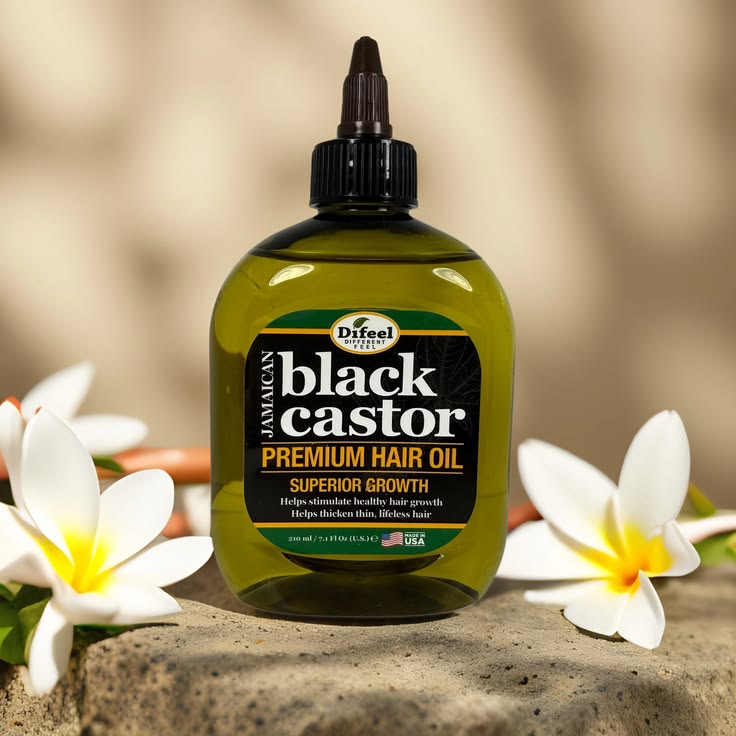
The main difference between JBCO and regular castor oil is the preparation process. While they are both gotten from castor beans, the beans for the Jamaican Black Castor Oil are toasted before extraction. This is why the oil looks black and also smells like smoke. Compared to cold pressed castor oil, the roasting process increases the ash content and the pH levels of the oil. It is also said that the higher pH level makes it easier for the Jamaican Black Castor Oil to penetrate the scalp but this claim is yet to be scientifically proven. However, what can be scientifically proven is that 85% to 90% of the oil is composed of ricinoleic acid.
4C hair responds quite positively to the Jamaican Black Castor Oil because it provides long-lasting moisture and scalp stimulation. The downside of this product, however, is typical for any thick oil – it is difficult to rinse it off, it may accumulate due to the over-use and it is not appropriate for fine or low-porosity hair. Most people report that applying a thick layer leads to accumulation and results in limp roots. So, if you have oily scalps, it is advised that you use it once a week rather than daily.
The difference in applying the Jamaican Black Castor Oil depends entirely on weather conditions of where you live. Due to the high density of this product, the effects will vary in different climates. For example, thick layering in humid summer in the UK will be suffocating and result in sweat accumulation, so a thin layer or blending with a lighter oil (such as jojoba) is advised. On the contrary, the high density of the product works positively for dry winters in Canada, as it helps to lock in moisture that the dry air evaporates. In Nigeria, during the dry or harmattan, it is advised that you follow the same approach.
Batana Oil
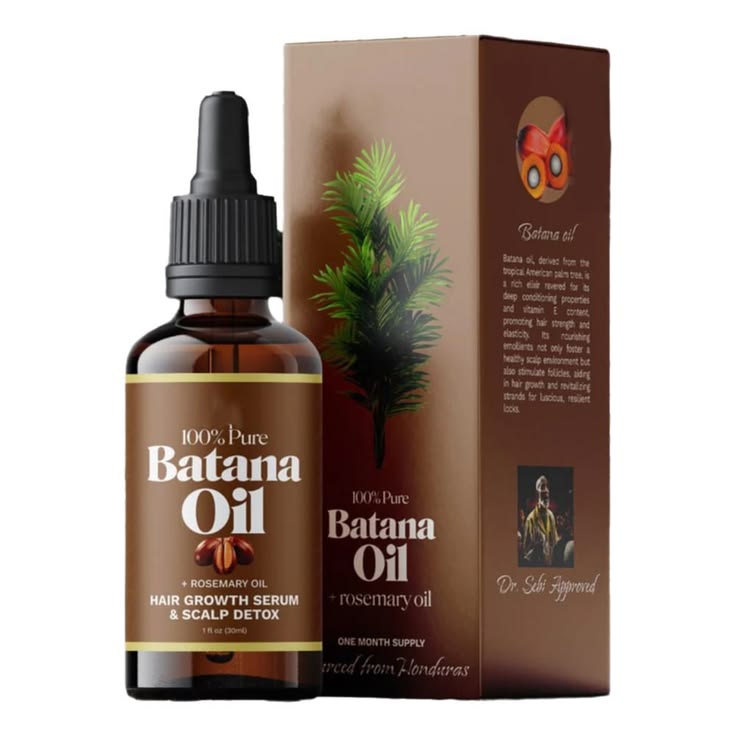
Among the three oils mentioned above, Batana is the newest one to get the attention from outside its native region and the backstory of this oil makes the hype around it even better. The oil is gotten from the nut of an American oil palm tree known as Elaeis oleifera, and is native to the isolated rainforests of La Mosquitia in Honduras. Historically, this oil has been used by the native inhabitants of the Miskito tribe, who refer to themselves as Tawira, meaning “people of beautiful hair.”
The traditional process of this oil extraction is an extremely tedious one and takes several days. First, the ripe fruits are harvested from the trees, cooked to break down the outer covering and peeled off from the pulp to get the nuts inside. After that, the nuts are cracked, and the kernels are roasted slowly in an open wood fire until they are grounded and pressed into a paste to extract the oil. This cooking process changes the chemical structure of the oil such that unrefined Batana oil has a thick pasty texture and a distinct smell of roasted coffee and tobacco.
This rigorous procedure helps to maintain high levels of oleic and linoleic fatty acids, along with generous amounts of carotenoids and phytosterols, which function as natural collagen enhancers and ant-inflammatory agents for your scalp. Since one tree can produce only a small quantity of oil at a time, production cannot meet the growing viral demands of consumers. This explains the relatively high price of the product and frequent fakes in the market.
The problem, however, is that most of the online reputation of batana is based on looser curl patterns, not to mention that there is no independent and hair type-specific information about its performance on tight 4C coils compared to 3A or 3B curls. The Batana oil also looks a lot like shea butter in its pure form and would require you to melt in between your hands before you use it— something that is usually not required of other oils and that people often forget about in their rush to finish a wash day routine. Given that highly effective products attracts counterfeits, purchasing from a vendor that sells original products is better.
Application, Wash Day, and Not Weighing Your Hair Down
All three oils do not apply well as leave-ins on a 4C hair, but they will be more effective when you use them as scalp treatments before your wash day and applied to your damp and sectioned hair as opposed to being massaged into your dry hair after styling. To apply, massage all three oils into your scalp per section for a few minutes using your fingertips rather than your nails.
The Mielle rosemary mint Oil is quite easy to incorporate into the daily and every-other-day regimen due to its lightness. The Jamaican Black Castor Oil is ideal when used on a weekly basis either as a pre-poo treatment or scalp treatment, and is left on for thirty minutes to overnight before washing off since that is when buildups occur. Batana oil falls somewhere in between; this is due to its richness, which calls for weekly deep treatment left overnight. It can also serve as a sealant.
Pricing Across Markets
Mielle Rosemary Mint oil costs around £10.99 for a 59ml bottle in the UK in Superdrug, which is equivalent to about $14 USD, whereas in the USA, a similar bottle of 2oz will cost between $9 and $10 on Amazon and on the official Mielle website. In Canada, prices will be about CAD $15-$18 after accounting for shipping costs due to the fact that Mielle isn’t as readily available in Canadian pharmacies compared to the US and UK markets. Check current price and availability here as pricing on the market place changes often.
JBCO produced by well-known companies such as Tropic Isle Living or Sunny Isle will retail between $8-$10 USD for 4oz bottles and between $15 for an 8oz bottle, while prices in the UK and Canada will be 20% to 30% more expensive after taking into account import costs, since JBCO isn’t produced locally in these countries.
Batana Oil happens to be the most expensive out of the three brands, with prices ranging from $20 to $35 USD for a 4 ounce bottle. If you’re purchasing from the UK, the seller doesn’t directly convert the money; instead, they charge you more or less the same price in pounds due to high import costs. It is one of those rare beauty products where trying to get it on a discount will only end up harming you. Since getting the original product requires several days of hard manual work done by the locals of Honduras, any discounted item should raise an eyebrow because the chances of it being fake is quite high.
What Are Users Saying?
Quijuandas, a natural hair creator, tried the Mielle Organics Rosemary Mint Oil during the shedding stage after delivery. She pointed out that the oil gives a great refreshing tingle effect that targets the scalp and helps you safely go through the fragile stage of your hair if you use it alongside the LCO moisturization routine (Liquid-Cream-Oil).
LifewitqueenP provided a detailed guide on how to use the Jamaican Black Castor Oil. She appreciated that it helps moisturize the hair, increases blood flow to the scalp as well as supplies nutrients to the hair follicles.
The Floom Verdict
For hair growth, Jamaican Black Castor Oil: because of the sheer number of testimonials on using it on afro-textured hair, provided it is done once a week and not every day.
For scalp health, Mielle Rosemary Mint: Due to its lightweight formulation and focus on improving circulation, which makes it the most likely to be used regularly without product build-up.
For a low-manipulation regimen, Batana Oil: Since one application per week, overnight, covers both scalp and hair without the need for an additional sealant.
For cold weather, JBCO: It is an advantage in reducing moisture loss in very cold weather conditions.
Mielle Rosemary Mint Scalp & Hair Strengthening Oil
It’s best for: 4C hair that tends to be heavy, or if you’re looking for daily scalp oil use.
Not a good buy if: your major focus is length retention and breakage control, because this oil does not have the sealing properties of the other two.
Best substitute: the Mielle Rosemary Mint Light formulation, since it is less likely to weigh down finer 4C hair.
Jamaican Black Castor Oil
It’s best for: 4C hair with thin edges, dry scalp or breakage at the ends, particularly if you live in cold climate zones.
Not a good buy if: you have an oily scalp as it may result in product build-up after a few weeks of use.
Best substitute: Light Blends of JBCO which combine the castor oil with other light oils such as almond or jojoba.
Batana Oil
When to use: If you want one treatment per week for your scalp and your hair, and if you are ready to spend more for an original product.